
April 8, 2026
When Half the Water Still Delivers Full Yield: Yaarn in Tomato and Pepper Under Drought Stress
Share
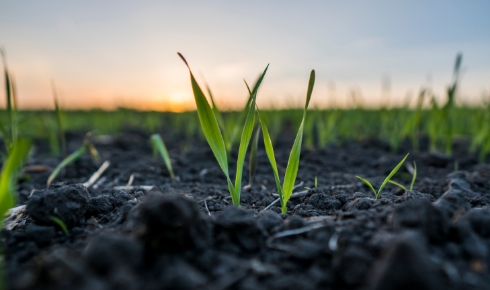
European field trials show that Yaarn-treated tomato and pepper crops with 50% irrigation deliver performance comparable to untreated controls with full water supply. Here is how it works, and what it means for growers facing water restrictions.
The Challenge: Water Scarcity in High-Value Vegetable Systems
Across Southern Europe, water availability is no longer guaranteed. Greece, Spain, Italy — regions that produce the bulk of Europe's tomatoes and peppers — are experiencing prolonged dry periods, rising irrigation costs, and regulatory pressure to reduce water use. For growers of high-value protected and open-field vegetable crops, the question is no longer whether water will be limited, but how to maintain yield and quality when it is.
Drought stress affects every stage of vegetable production. It reduces canopy vigor, limits photosynthetic activity, disrupts flowering and fruit set, and ultimately constrains both the quantity and quality of marketable product. The traditional response — apply more water — is increasingly unavailable or unaffordable. The practical response must be different: help the crop perform better with the water that is available.
This is the agronomic problem Yaarn was developed to address. And in 2024, rigorous European field trials conducted in Greece demonstrated exactly how effective it can be.
"Drought stress is not just about keeping plants alive — it is about keeping them productive. Yaarn targets the biology that makes the difference."
The Science: Genetic Priming for Stress Resilience
Yaarn is a solution that enhances plant biological processes in response to abiotic stress, including drought, heat, and light stress, while improving crop quality and yield. Its combination of active ingredients works across multiple physiological pathways simultaneously, stimulating chlorophyll synthesis and boosting overall plant metabolism.
What makes Yaarn scientifically distinctive is its gene-level mode of action. A genetic study conducted by Harper Adams University examined how Yaarn influences gene expression in cultivated plants. The findings were clear: Yaarn application caused the up- and down-regulation of a substantial number of genes associated with stress response.
The study identified a 'priming' effect, Yaarn upregulates specific stress-response genes, effectively preparing the plant to cope more efficiently when water limitation occurs. The genes influenced by Yaarn span responses to light, heat, drought, and recovery from damage. This broad-spectrum genetic activation explains why Yaarn's effects are measurable across different crops and different stress conditions - and why it works not just under drought, but also in well-watered systems where it amplifies baseline performance.
Field Evidence: 2024 Tomato and Pepper Trials in Greece
In 2024, Agri Sciences Biologicals conducted drought stress trials on tomato and pepper in Greece through leading European CRO. The trials were designed to answer a critical commercial question: can Yaarn maintain vegetable crop performance when water availability is reduced by 50%?
The trial design was rigorous. Four treatment groups were established for each crop: untreated control with 100% irrigation, Yaarn-treated with 100% irrigation, untreated control with 50% irrigation, and Yaarn-treated with 50% irrigation. Yaarn was applied as a foliar spray at 2 liters per hectare in four applications beginning at early vegetative stages (BBCH 15-16 for tomato and pepper) and continuing at two-week intervals through flowering and early fruit development.
This protocol allowed the trial to isolate Yaarn's effect both under optimal conditions and under water stress - and to directly compare Yaarn-treated drought-stressed crops against untreated fully irrigated controls.
Results: Vigor, Chlorophyll, and Canopy Performance
The vegetative performance data from both tomato and pepper trials showed consistent and statistically significant effects of Yaarn across all measured parameters.
Crop vigor: Yaarn with 100% water, achieved 95% vigor rating in tomato compared to 85% in the untreated control - a clear improvement under optimal conditions. More importantly, Yaarn with 50% water maintained 85% vigor, equal to the untreated control with full irrigation. In practical terms, Yaarn-treated drought-stressed crops looked as vigorous as untreated well-watered crops.
Leaf Area Index (LAI): LAI is a direct indicator of photosynthetic capacity. In tomato, Yaarn with 100% water reached an LAI of 37 compared to 32 in the untreated control. Yaarn with 50% of the water achieved an LAI of 31 - nearly matching the fully irrigated control and significantly exceeding the untreated 50% water treatment (LAI 30).
Chlorophyll content: Chlorophyll levels directly reflect the plant's ability to photosynthesize and produce energy. Yaarn-treated plants consistently showed higher chlorophyll content than untreated controls under both irrigation regimes, confirming that Yaarn's mode of action - stimulating chlorophyll synthesis - is measurable in the field, not just at the genetic level.
Results: Flowering, Fruit Set, and Yield
The reproductive performance data tells the most commercially relevant part of the story. Vegetable growers are not paid for canopy vigor - they are paid for marketable fruit. The Yaarn trials measured flowering intensity, fruit set, fruit number, fruit weight, and fruit quality across five harvest events in tomato and multiple harvests in pepper.
Tomato: Yaarn with 100% water produced 15% more fruits Vs the untreated control. Yaarn with 50% water, produced same amounts of fruits to the untreated control with full irrigation.
Pepper: Similar patterns were observed. Yaarn with 100% water produced +10% fruits compared to the untreated control. Yaarn with 50% water-maintained fruits, closely matching the fully irrigated untreated control.
Critically, Yaarn also reduced flower and fruit abortion - one of the most common yield losses under drought stress. In tomato, untreated plots with 50% water showed significant flower abortion, while Yaarn-treated plots with the same irrigation level-maintained flower retention rates like fully watered controls.
Results: Quality Parameters That Drive Market Value
Yield is not the only determinant of commercial success in vegetable production. Fruit quality, color uniformity, shape consistency, maturation uniformity, and Brix (sugar content), directly affect marketability and price.
Brix: In tomato, Yaarn with 100% water achieved +13% of Brix degree Vs untreated control, a meaningful improvement in fruit sweetness and flavor. Yaarn with 50% water maintained a Brix, statistically like the fully irrigated control.
Color, shape, and maturation uniformity: Across both tomato and pepper, Yaarn-treated fruits showed superior color development, shape consistency, and uniformity of maturation compared to untreated controls. These are the quality attributes that determine whether produce commands premium pricing or is downgraded at market.
Conclusion: A Tool for the Reality of European Vegetable Production
For vegetable growers in Greece, Spain, Italy, and across Southern Europe facing water restrictions, rising irrigation costs, or simply unpredictable rainfall, Yaarn offers a proven agronomic tool to manage drought stress without sacrificing commercial performance.
Discover how Yaarn can support your vegetable production programme. Contact your Agri Sciences Biologicals representative.

Partner for sustainable agriculture.
Let's work together to enhance crop performance while protecting our planet.