
April 8, 2026
Late Spring Frost in Europe: How One Cold Night Can Threaten Your Entire Season
Share
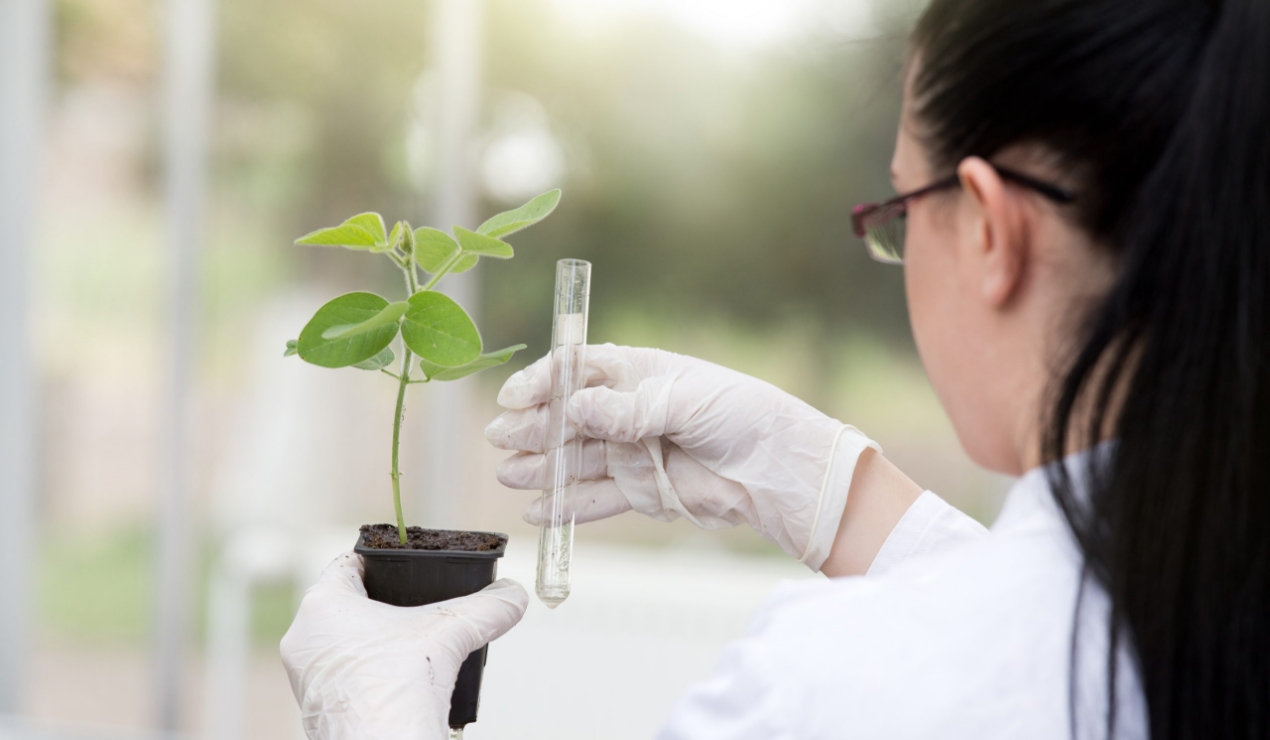
On April 7, 2021, a devastating frost swept across France, Germany, and Austria. Temperatures plunged to -4°C during peak apple bloom and cherry flowering. Total losses exceeded €2 billion. Most growers had no effective response. Here is what has changed since then.
The Growing Frost Crisis in Continental Europe
If you are growing stone fruits, apples, or wine grapes in Central Europe, you have likely noticed a worrying trend: spring frosts are becoming more frequent and more damaging. This is not bad luck — it is a consequence of climate change creating a dangerous mismatch between bloom timing and frost risk.
Warmer February and March temperatures now advance flowering by 10-14 days compared to historical averages. But late spring cold air intrusions have not disappeared — they are simply hitting crops when they are most vulnerable. One night at -3°C during full bloom can eliminate 60-80% of crop potential in apples, cherries, apricots, and grapevines. For a 20-hectare apple orchard, that single night can mean €50,000-80,000 in lost revenue.
The 2022, 2023, and 2024 growing seasons all saw significant frost damage across multiple European regions. Climate scientists predict this pattern will continue: earlier bloom dates combined with persistent late spring cold events. The question for growers is no longer whether frost will occur, but how to prepare for it.
"Climate change is not making frost disappear — it is making crops more vulnerable when it arrives."
Why Traditional Methods Often Fall Short
Most growers are familiar with wind machines, overhead irrigation, and heating systems. The challenge is that these methods are expensive, energy-intensive, and often impractical at commercial scale.
Wind machines: €15,000-25,000 per unit, each covering only 4-6 hectares. Operating costs reach €150-200 per night. For a 20-hectare orchard, the capital investment alone exceeds €60,000.
Overhead irrigation: requires 25-40mm water application per hectare — equivalent to 250,000-400,000 liters. This method only works during the actual freezing event and consumes massive water resources that may not be available in drought-prone regions.
Heating systems: fuel costs of €300-500 per hectare per night, combined with significant labor requirements and a high carbon footprint. Economically viable only for the highest-value crops.
The fundamental issue with these approaches is that they attempt to change the weather around the crop. They are reactive, expensive, and only partially effective. A different approach is needed — one that works with the plant's own biology rather than against the environment.
Gene Priming: Preparing Plants Before Frost Strikes
Yaarn represents a fundamentally different approach to frost management. Rather than trying to warm the air or apply water during the frost event, Yaarn prepares plants at the molecular level to withstand cold stress before it occurs. When applied 48-72 hours before a predicted frost event, Yaarn's active ingredients act as biochemical signals that prime the plant's own stress-response systems.
Within 48 hours of application, Yaarn triggers the activation of cold-response genes, leading to the production of protective proteins, antioxidant enzymes, and membrane stabilizers. The high potassium content in the formulation lowers the cellular freezing point by 0.5-1.0°C and strengthens cell wall structure. If frost damage does occur, Yaarn-treated plants show reduced oxidative damage and faster metabolic recovery.
This is not theoretical. A genetic study conducted by Harper Adams University demonstrated that Yaarn application causes measurable up- and down-regulation of genes associated with stress response in multiple crops, including the creation of a priming effect that prepares the plant to respond more effectively when cold stress arrives.
What Yaarn Can — and Cannot — Do
It is important to set realistic expectations. Yaarn is not a replacement for active frost systems in severe events, and it will not prevent damage at extreme temperatures. What peer-reviewed research and European field trials demonstrate is a measurable shift in the damage threshold under defined conditions.
Realistic range: Yaarn shifts the frost damage threshold by 0.5-1.5°C under optimal conditions. For example, flowers normally damaged at -2°C may tolerate -2.5°C to -3°C when treated. This effect is most consistent during radiative frost events — clear, calm nights with frost duration of 2-6 hours.
Critical limitation: below -4°C; at bloom stage, ice crystal formation overwhelms biological defenses. Yaarn can reduce damage severity and improve post-frost recovery, but it cannot prevent extensive losses at these extreme temperatures.
Where Yaarn excels: mild to moderate frost events (-1.5°C to -3.5°C), short exposure duration, and the critical window from bud swell through early fruit development. It is also highly effective at accelerating metabolic recovery following frost damage.
Real Field Results from European Growers
The effectiveness of Yaarn has been validated across multiple European regions in the 2023 and 2024 growing seasons. These are not laboratory claims — they are the outcomes of independent field trials conducted under commercial growing conditions.
Alto Adige (South Tyrol), Italy — Apple, April 2024. A frost event reached -2.8°C for 4 hours during pink bud stage. Yaarn was applied at 2.0 L/ha 60 hours before the frost. Flower cluster damage was measured at 24% in treated blocks compared to 42% in untreated controls — a 43% reduction in damage. Final yield reached 38.5 tons/ha in treated blocks versus 28.2 tons/ha untreated, representing an additional €4,850 per hectare in revenue.
Champagne Region, France — Pinot Noir, May 2023. Temperature dropped to -1.8°C for 3 hours during young shoot development. Yaarn applied at 2.0 L/ha 48 hours before the event reduced shoot necrosis to 21% compared to 38% in untreated vines — a 45% damage reduction. Final yield was 9,200 kg/ha treated versus 6,800 kg/ha untreated, adding €7,200 per hectare.
Brandenburg, Germany — Sweet Cherry, April 2024. A -2.2°C frost for 2.5 hours hit during white bud stage. Yaarn treatment at 2.0 L/ha applied 72 hours prior reduced flower mortality to 18% versus 31% untreated. Final yield reached 8.4 tons/ha treated compared to 5.9 tons/ha untreated, resulting in an economic benefit of €7,200 per hectare.
These results reflect what Yaarn is designed to do: significantly reduce damage in mild to moderate frost events, which represent 70-80% of damaging frosts in most European fruit-growing regions. The difference between 40% crop loss and 20% crop loss is often the difference between a profitable season and a financial disaster.
Application Guidance for Key European Crops
Yaarn is most effective when applied as part of an integrated frost management strategy, not as a standalone solution. Application timing, dosage, and combination with active systems depend on the crop, growth stage, and severity of the forecast event.
Apples: the most critical period is pink bud through petal fall (late April to mid-May in most regions). Apply 2.0-2.5 L/ha as a foliar spray 48-72 hours before a forecast frost event. If damage occurs, a post-frost recovery application of 1.5-2.0 L/ha within 48 hours accelerates metabolic recovery.
Stone fruits (cherry, apricot): these crops bloom early and are extremely frost-sensitive. Sweet cherry benefits most from applications at white bud stage and during full bloom. Apricot flowers are damaged at -1°C to -2°C without treatment; Yaarn can extend tolerance to approximately -2.5°C, with the primary benefit being damage reduction rather than complete avoidance.
Viticulture: the critical windows are bud burst (April-May) and young shoot development. Apply 1.5-2.0 L/ha when buds swell and frost is forecast within 5 days. Young shoots can be protected down to approximately -2.5°C to -3°C compared to -2°C untreated, with significant reductions in shoot necrosis and faster regrowth from secondary buds if primary buds are damaged.
Conclusion: The Cost of Being Unprepared
The 2021 European frost disaster cost the fruit and wine industries over €2 billion. Every subsequent season has brought additional localized frost events causing significant crop losses. Climate projections indicate this pattern will persist, warmer springs advancing bloom dates, combined with continued late-season cold intrusions.
Traditional active frost systems remain valuable for severe events, but they are expensive to install and operate. For most frost events — those in the -1.5°C to -3.5°C range lasting a few hours — a biological approach offers a practical and economically viable layer of defense.
Yaarn does not eliminate all frost risk. What it does is shift the threshold at which damage occurs, reduce the severity of damage when it happens, and accelerate recovery afterward. In a season where frost strikes once or twice at moderate intensity, that difference is often what determines profitability.
Learn more about frost management strategies for your crops. Contact your AgriSciences Biologicals representative.

Partner for sustainable agriculture.
Let's work together to enhance crop performance while protecting our planet.